The new franchisee who goes quiet rarely asks for help first
Every franchisor remembers the first franchisee who went silent: the calls that stopped getting returned during build-out, then a visit rescheduled twice, then an agreement that quietly heads toward release. Could you have recognized the risk before the calls stop, or only after?
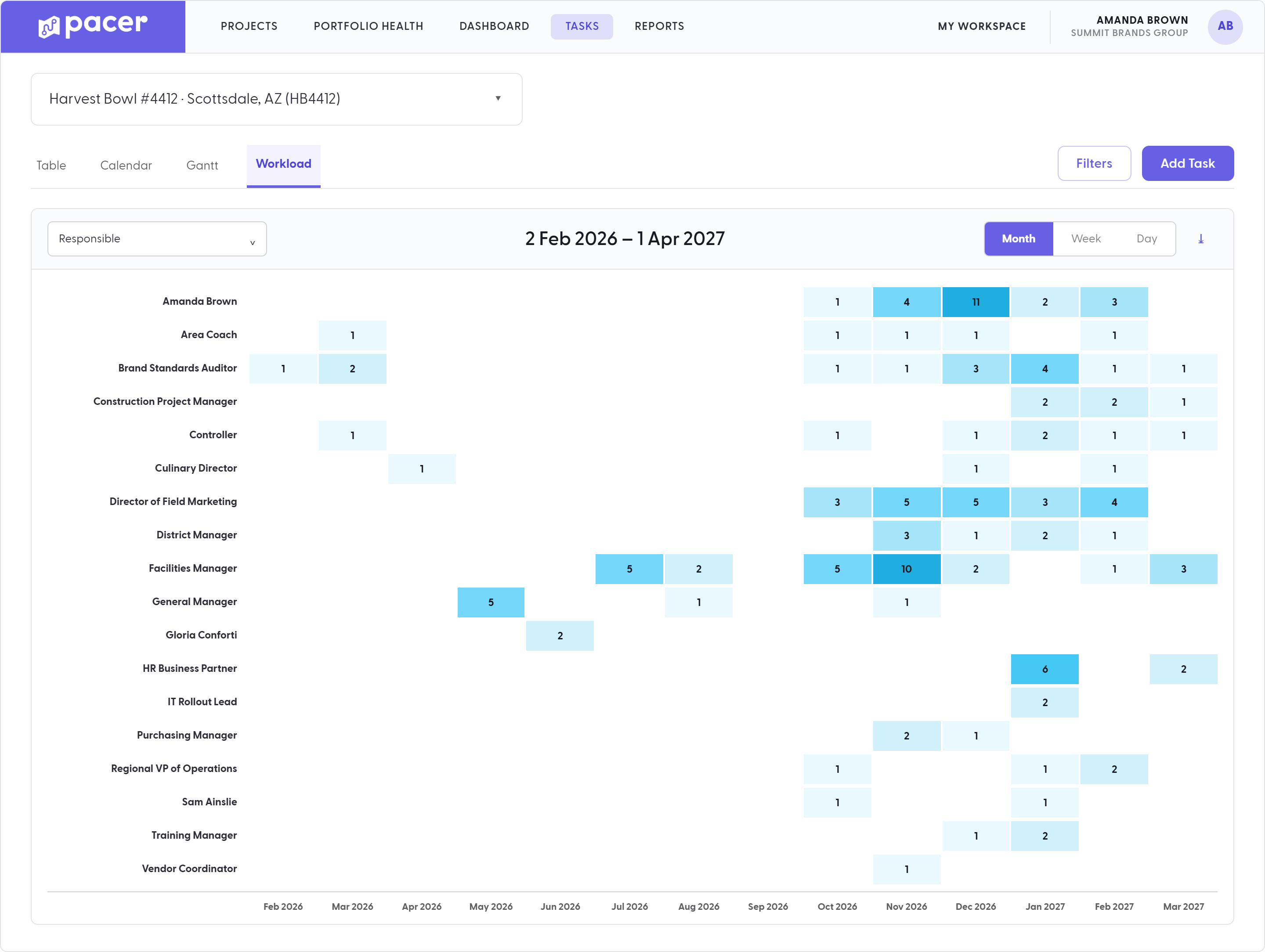
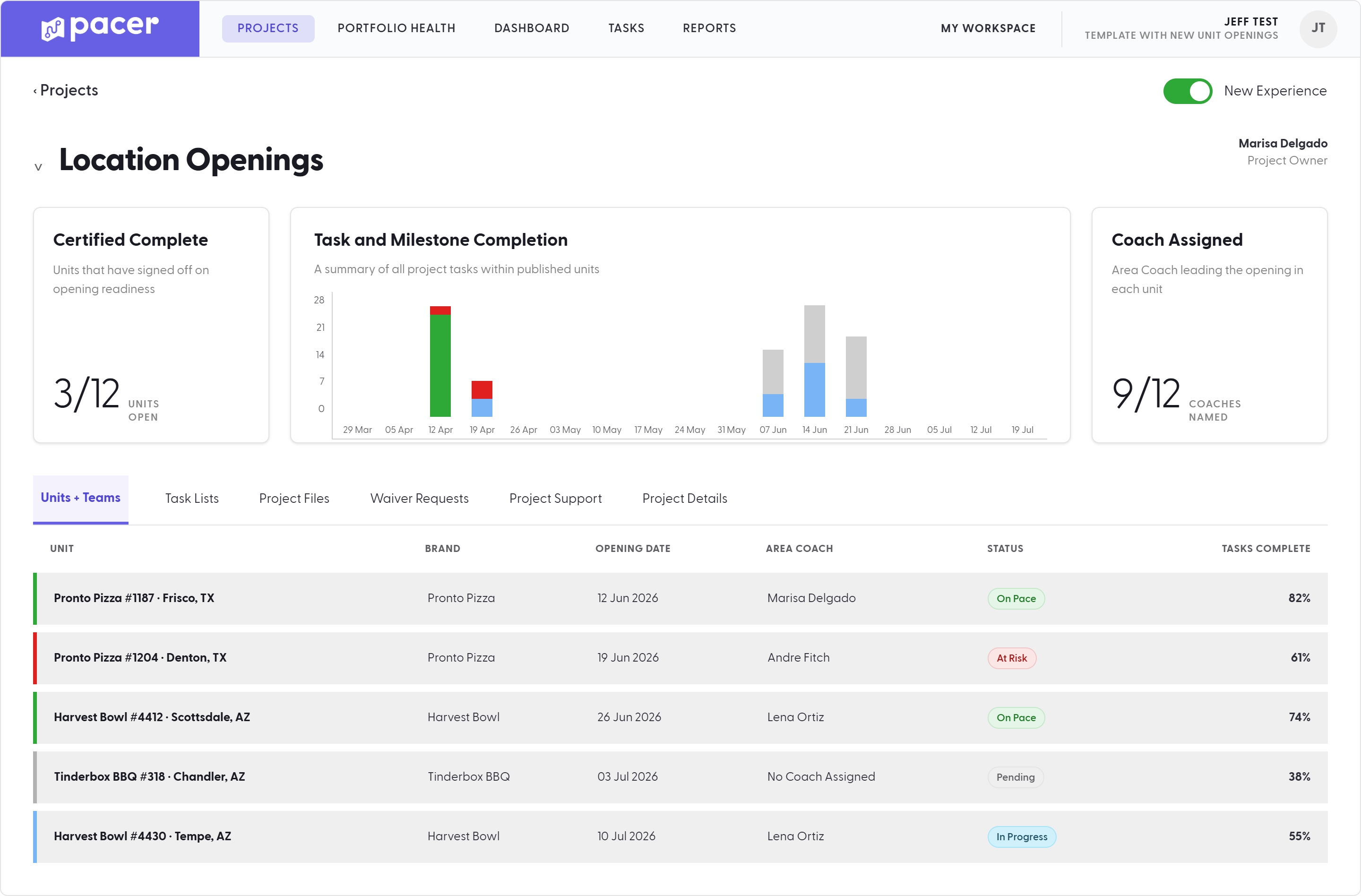
FDD Item 20 turns all of it into a single disclosed line. It doesn't say who's actually at risk, or why. Pacer's Health and Risk Scores grade each location on what's going right, wrong, or sideways. We also built a Backlog Revenue Calculator that turns five numbers you already know, like units signed and your royalty rate, into the royalty revenue your backlog is holding back.
Where the silence actually starts
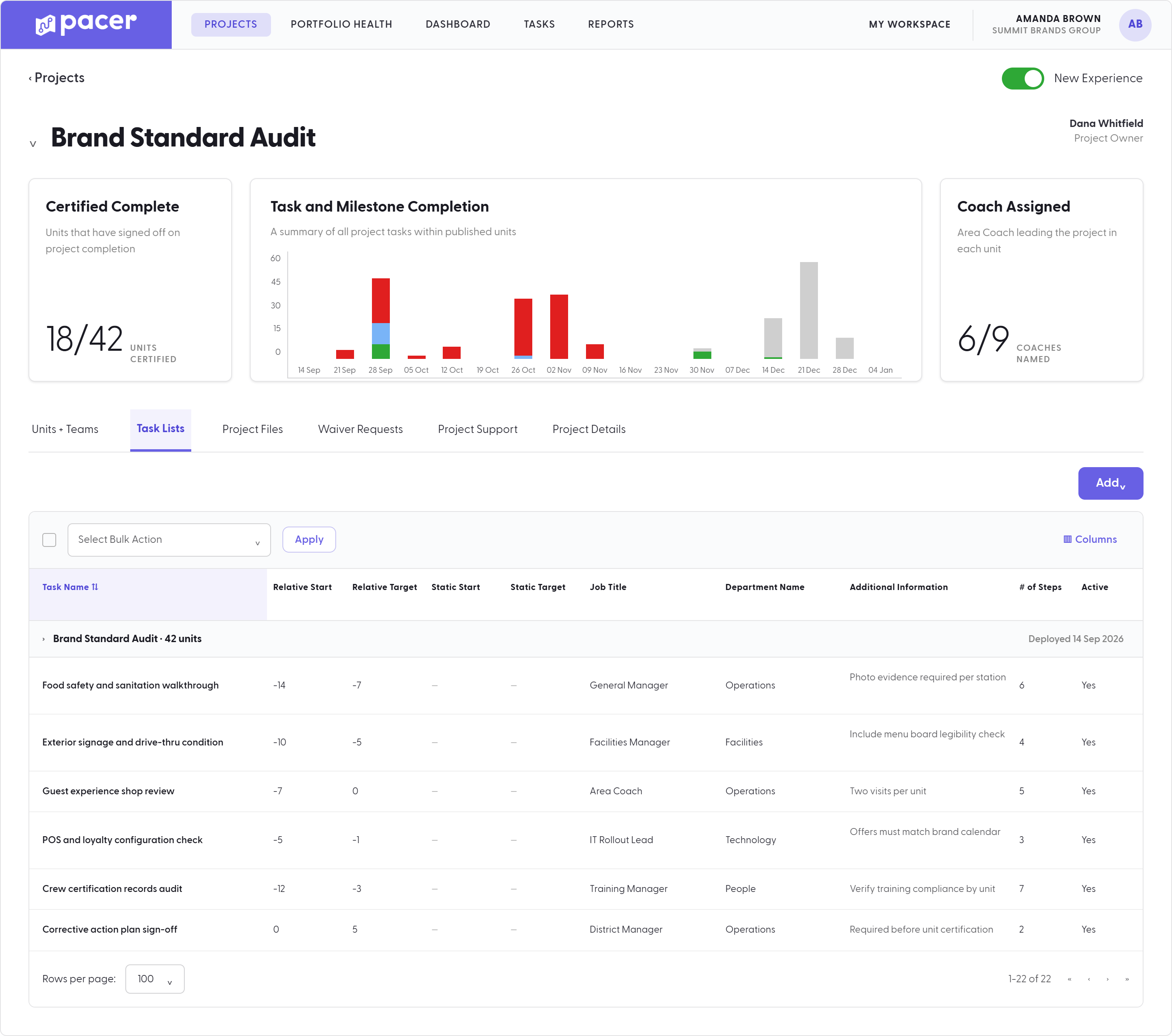
Each of these starts small: a missed callback, a permit delay nobody escalated, a blocker on a checklist milestone that sat unaddressed for a week. Put a dollar figure on your signed-but-not-opened backlog with Pacer's free Backlog Revenue Calculator, no email required for your first run.
Every franchisor who's built a real system has lived through some version of the five warning signs below.
The first missed callback looks like a scheduling conflict, not a warning: A franchisee three weeks behind on permits isn't behaving any differently than one who's just busy...yet. By the time the difference is obvious, the file's already cold.
Your best answer to "how's the pipeline" is a guess dressed up as a percentage: When someone in a leadership meeting asks how many signed units are actually on track and the honest answer is "most of them," nobody can say which ones are the exception.
Nobody flags a franchisee who has gone quiet for a week: Frandev is busy closing new signings, and ops is helping the franchisees who raise their hands. By the time three weeks pass and somebody finally calls to check in, the conversation is often about an exit.
The checklist changes, but nobody tells the fifteen locations already mid-build: A brand standard update that doesn't reach every open project at once means some franchisees are building last month's version, and won't find out until a failed site inspection tells them.
Frandev hands off the win, and ops inherits the risk with no record of what was promised: A franchisee's confidence is highest on the day they sign. A rocky handoff into the onboarding and launch is the fastest way to spend that good will down, sometimes before the first shovel goes in the ground.
What you don't find out until it's too late to matter
A signed-but-not-opened backlog rarely costs you all at once. Expected royalties still aren't on the books eight months after signing. A franchisee stops answering by the third unreturned call and asks for a release by the fourth. An area developer's next five units quietly stall because the first one never got the attention it needed, and now the whole territory is behind schedule. Most of it goes unnoticed until someone raises it in an exit interview, or in the FDD line item nobody on the leadership team wants to explain.
See your own pipeline before the board does.
Run the two-minute Backlog Revenue Calculator with five numbers you already have on hand, or read what changes once you can see a stalling franchisee before the third unreturned call. Both are free. Neither requires a sales conversation.
Every number here traces back to a real FDD line item.
The calculator asks for five numbers a franchisor already has: units signed, units opened, how long a typical opening takes, average monthly revenue per unit, and your royalty rate. Signed and opened counts live in Item 20, your opening timeline in Item 11, and your royalty rate in Item 6. Revenue per unit comes from your Item 19 if you publish one, or from your own royalty reports. Nothing is benchmarked or assumed on our side. The result is the math your finance team would run: units still waiting to open, times what a unit earns, times your royalty rate.
Starts with the signed and opened counts you already report in FDD Item 20
Uses your own opening timeline, unit revenue, and royalty rate, with no industry averages mixed in
Built by the team behind Pacer's opening playbooks, already running across 159,000+ locations