
The Standard Isn't Real Until It Enforces Itself
You wrote the instructions. You published the checklist. You told every team what done looks like. Then a critical task got marked "complete," with no supporting file attached. A location sat past due for a week before anyone noticed. A task status changed and no one downstream was told. The standard existed. It just did not hold, because nobody was watching it.
A Rule Is Simple. When This Happens, Pacer Does That.
A Task Becomes Past Due
Pacer sends the email. No one has to remember to check.
A Task Is Marked Complete
Pacer checks for the file, the comment, or the sign-off, before it counts as done.
A Task's Status Changes
Pacer fires a webhook, validates the requirement, and keeps the record straight.
A Task Is Marked Not Applicable
Pacer requires a reason, not just a shrug.
Set Rules Once, at the Baseline. It Governs Everywhere.
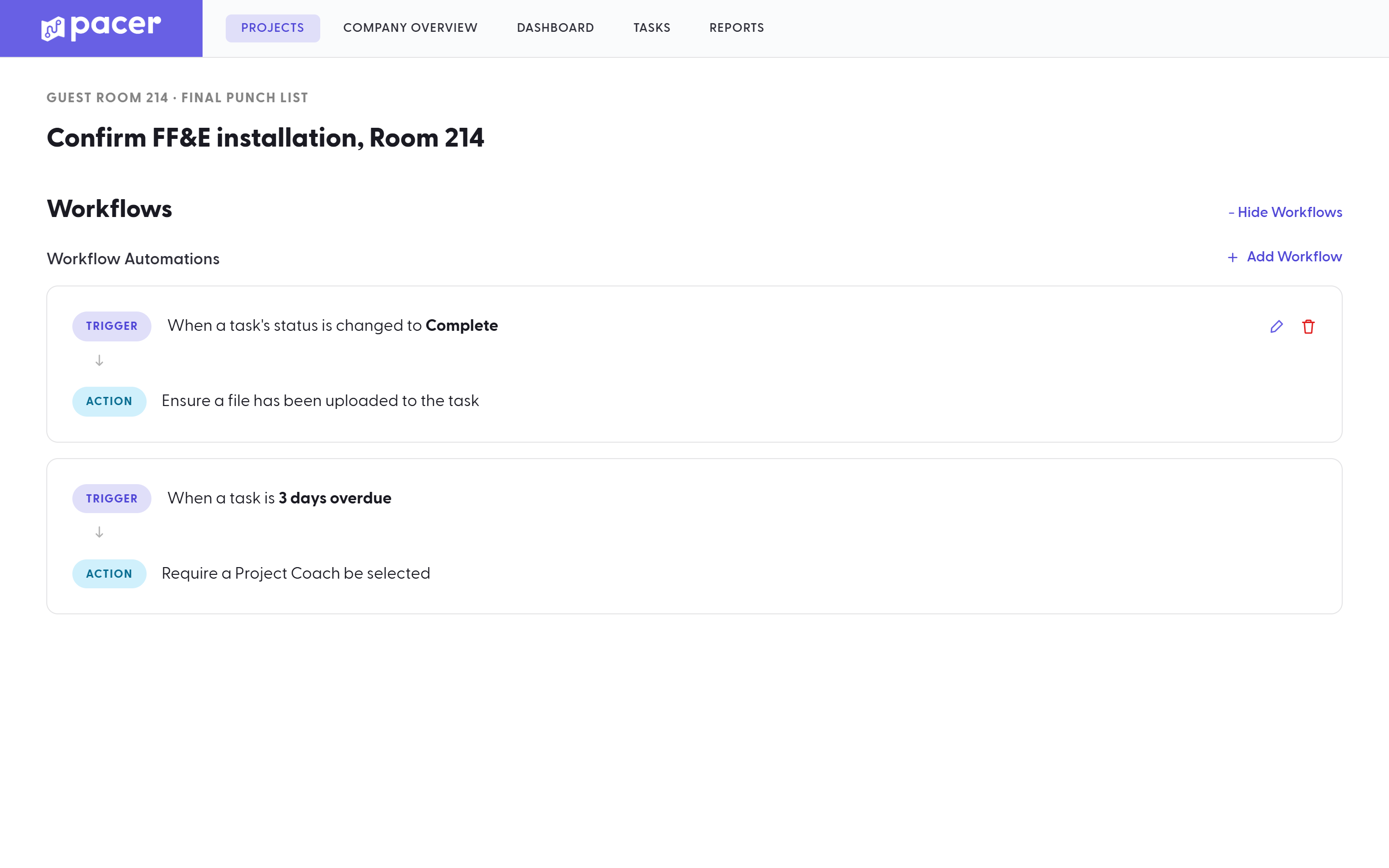
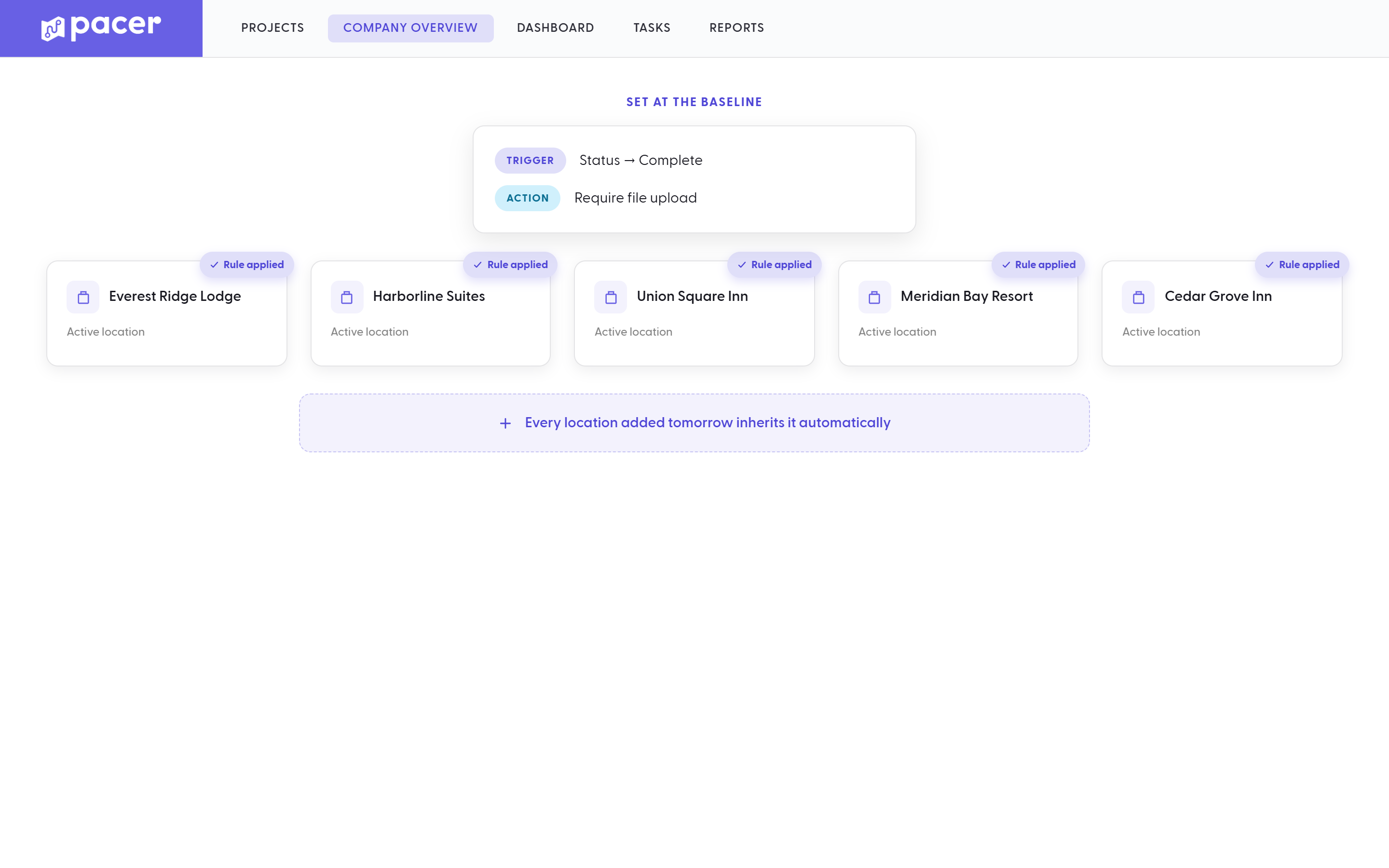
Rules are not configured location by location, task by task, project by project. A Rule is set once, at the Baseline, and every location task under it inherits the Rule automatically. Every location running today. Every location added tomorrow.
There is no override and no opt out. A location cannot quietly disable a requirement, skip a validation, or turn off a notification because it is inconvenient this week. The Rule set at the standard is the Rule enforced at the standard, everywhere, without exception.
Change the Rule, and it changes everywhere. Remove it, and it is gone everywhere. One decision, one place, total reach.
What Rules Protect, Out of the Box
Proof Before Complete
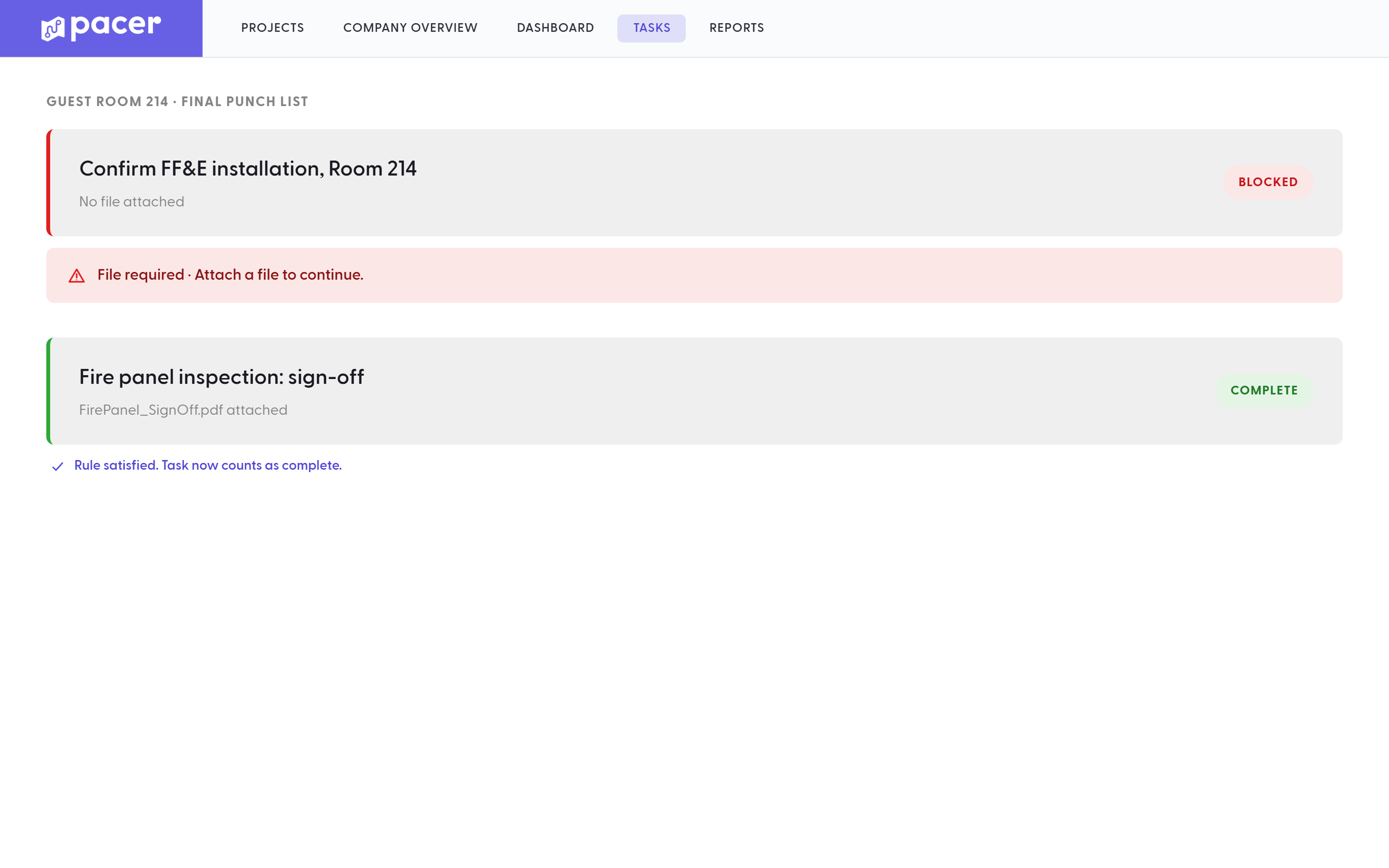
When a task is completed, Pacer can require the file, the comment, or the sign-off before it counts. Complete stops being a claim. It becomes a fact you can trust.
Nothing Goes Quiet
When a task slips past due, Pacer sends the alert before a location has to be chased down, and before a delay becomes a surprise.
No Escape Hatch
When a task is marked Not Applicable, Pacer requires an explanation, a comment, or a file before it is accepted. N/A stops being a shortcut.
The Right Eyes, Automatically
When a task's status changes, Pacer can require a Project Coach's review or notify the people who need to know, instantly, without anyone remembering to send the update.
A Daily Digest, for Every Person
Every day, Pacer tells each person exactly what needs them: what's due soon, what's due today, what's already past due, and what just became available to start. No one sets this up. It runs for every assigned task, every day, automatically.
Past Due, on Your Own Timeline
A location in Hong Kong and a location in Ohio do not share the exact same timeline and clock, so Pacer does not identically evaluate them. A task is marked past due the moment it is actually late for that location, not whenever a server in one time zone decides the day is over.
The same holds for what is due today. Hong Kong is not told a task is due today when, on its own clock, that day already passed. Every location finds out where it stands on its own morning, on its own schedule, not a day late and not a day early. Users can also choose what time of day their daily task digest arrives.
Nothing Gets Marked Done on a Technicality
If a file gets rejected, Pacer will not just flag it. It will reopen the task. Complete reverts to In Progress, and the person who uploaded it receives a comment explaining why.
A Checklist Hopes People Follow It. A Standard Makes Sure They Do.
Pacer does not ask a GM to remember that files are required before a task counts as done. It does not hope someone notices a task has gone quiet. It does not wait for a corporate audit to discover a location skipped a requirement three openings ago. It enforces the Rule the moment it is set, at every location, every time, without asking permission and without waiting for a reminder. That is not automation. That is command.